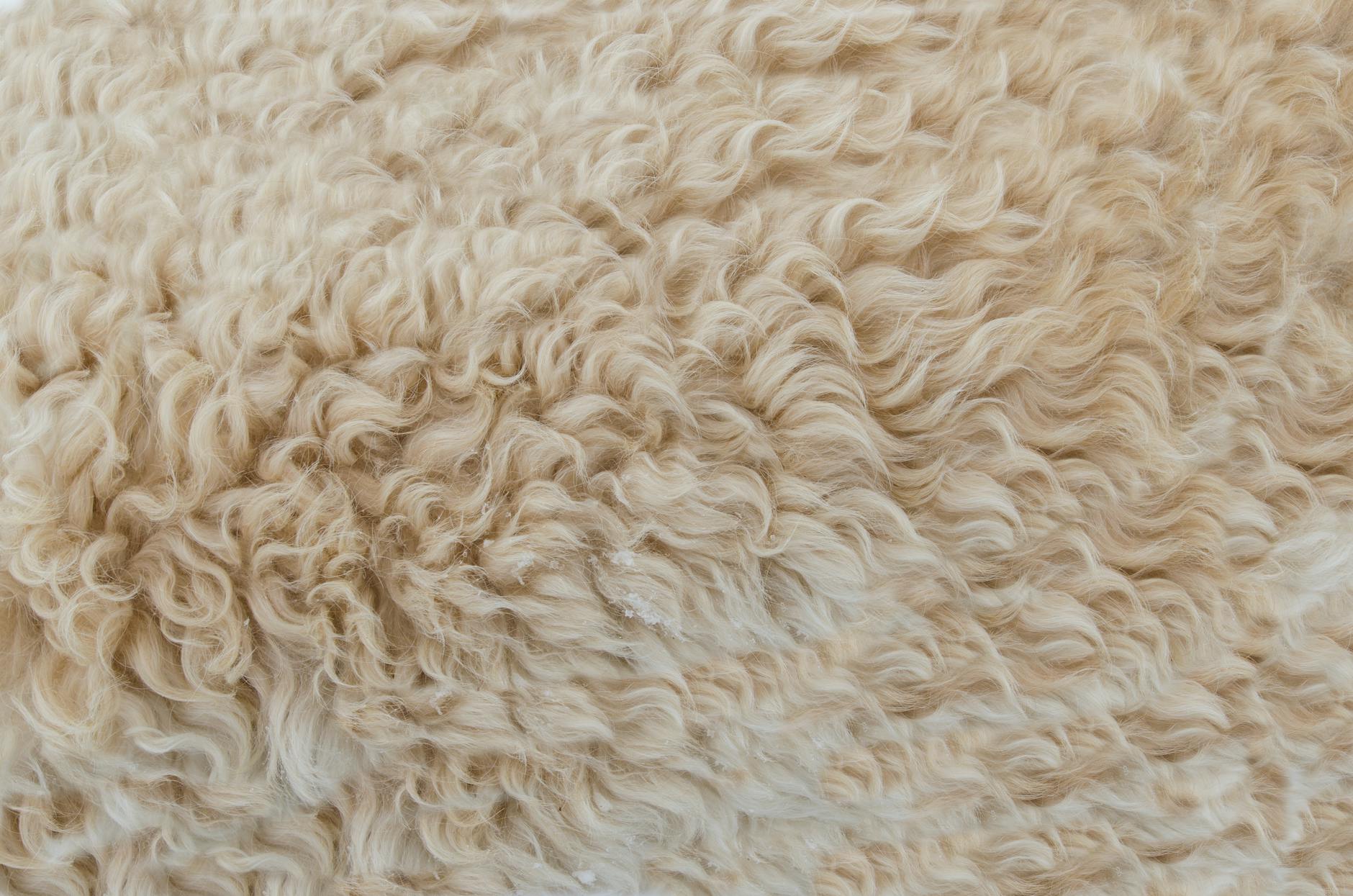

Sheep wool is a renewable resource with amazing qualities. Water resistant, flame resistant, antibacterial, and compostable, it really is the ultimate fibre which can create the ideal knitted fabric. Nevertheless, if it is too uncomfortable to wear, you are not going to knit with it, are you?
The most common complaint I hear from knitters about using wool yarn in knitting projects is that it is itchy and rough against their skin. That’s fair! As someone who has extremely sensitive skin my whole life, I get it. Once upon a time, I found all wool extremely irritating, and it’s taken me many years to be able to wear a wool sweater. I even found the wool fabric rubbing against my legs while I knit to be an annoyance! I find most mohair yarns unbearable to wear, and when I knit with alpaca yarns, the back of my throat becomes itchy. I’ve taken many allergy tests and, thankfully, I’m not allergic to sheep! They do not test for “exotics,” as they refer to llamas and alpacas, in allergy tests, so I might be allergic to those guys. I try not to expose myself to those fibres either as much as I can.
Although I have lots of excuses to stop knitting with animal fibres, I refuse! As a sensitive little soul myself, I have figured out some hacks so that I can knit with it and, mostly importantly, wear it! I would love to share my tricks with you so that you can include more wool in your wardrobe.
1. Long sleeves
Long sleeves are your friend! Putting a soft layer between you and the wool item you plan to wear is easy and super effective at reducing the itch. I use slim-fitting, 100% cotton long sleeved tees – my favourite are simple ones from H&M. I have found that white and off-white are the most versatile colours to put under my knits. I have some v-necks but the majority I use are regular crewnecks. Avoid crewnecks with wide necklines, as you really want the knitwear to sit at or below the level of the undershirt. If they are slim-fitting, they are more likely to fit under your knitwear without creating bulk.
2. Lotion
Using lotion on the parts of my body that tend to be dry and are most likely to itch, immediately prior to wearing wool, has helped. This is typically my elbows and hands.
3. Cut out scents – use these products instead!
This one is specific to my own journey, but if your skin is inflamed from exposure to chemicals, like scents, you will find any material next to skin more scratchy than it actually is.
I’ve struggled with extreme eczema since I was 6 years old, and, ironically, the first time my parent’s noticed the rash was after I spent time touching a sheepskin rug. I battled much of my life with rashes so extreme that my hands constantly oozed and bled, and my scalp itched and shed. I even got it on my eyelids, which was painful and I often couldn’t wear makeup because of it.
It wasn’t until I was in my late thirties that I was able to take a specialized allergy test through the University of Alberta which tested for contact allergies. Traditional allergy tests only look for antihistamine responses. Contact allergies don’t work through those pathways but they do cause extreme discomfort! Through this test (which took weeks to complete), I learned that I’m allergic to all scents, including essential oils, and also many chemicals found in skin products and soaps. If you suspect you may react negatively to scent, you might consider eliminating it from your daily life.

You might think cutting out scent would be easy – just stop wearing perfume – but scent hides in so many products in sneaky ways. Watch for labels like “Fragrance Free” as opposed to “Unscented.” Unscented means it doesn’t have a smell, but companies can use masking fragrances to overpower the smell of a product, so you might be getting extra chemicals with that label, not fewer! Read the ingredient list (don’t use products that don’t have one!) and avoid “fragrance” or “perfume” or “parfum.” Also, limonene is a common contact allergen that has to do with scent and sometimes is listed, but not always. It might be hidden with the “fragrance.”
Unpopular opinion: stop diffusing essential oils in your spaces. Those are scents! Even naturally-derived scents can cause an allergic reaction.
Here is a list of my favourite products – some of these are the only fragrance-free options I have found that I can tolerate. I’m not sponsored; I regularly spend my hard-earned money on these products.
- Body lotion: straight-up coconut oil and Vaseline (original petroleum jelly, anything fancier has additives).
- Hand lotion: Okeefe’s Working Hands
- Body wash: Dove’s Sensitive Skin – bars only! Liquid soaps contain lots of allergy-inducing chemicals.
- Hand soap: Rocky Mountain Soap Company Honey, Oats and Cocoa bar
- Shampoo and conditioner: Jack 59 Naked shampoo and conditioner bars
- Dish soap: Dawn Ultra dish soap
- Deodorant: Routine Cream Sweet Jane
4. Wear it with lots of positive ease
Now that we have our long sleeve undershirt on, we can wear our sweater. If you made that sweater with lots of positive ease (that means that the garment’s circumference is much bigger than your circumference around your widest part), not much of the garment is actually resting against your body. As I type this, I am wearing a long sleeve tee under a slim-fitting, set-in-sleeve Garden Party pullover made in Cascade 220 and I am constantly aware that I am wearing it because it is always itching my skin a little bit. If a garment is tight against my chest or belly, I notice right away. I can manage, but it’s always in the corner of my awareness that I am wearing something that itches. Now, if I was wearing an oversized pullover like the Lennox pullover, it would only be resting on my shoulders, so that would be the only place I would notice any itch. Since shoulders are not a very sensitive part of my body, it would not bother me.
I recommend 10 or more inches (25 cm) of positive ease for this tip to work.
5. Change yarn composition
If wool is really not working out for you, try mixing wool with another, softer fibre. I find merino-yak blends extremely soft next to skin and I’m sure cashmere-merino would be a similar effect. Pascuali Tibetan and Gathering Yarns Merino-yak are two yarns I can wear next to skin without issue. Always test a yarn on the most sensitive parts of your skin to see if it has any itch – neck, inside of the wrists, and forehead are good spots. I have found that if a yarn feels the tiniest bit itchy in the store, once I’m wearing an entire garment in that yarn, the itch factor increases exponentially. So be sure it feels luxuriously soft before you purchase, especially before you pay the big bucks for these fibres. I like to take my ultra-sensitive daughter along with me to the yarn store as my test subject! One downside of soft yarns is that they tend to pill a lot and don’t wear as well as more rustic ones, but be aware and accept that as a consequence before you buy.

Try using superwash wool. The superwash treatment reduces the scales on the wool fibre, which is the part that sticks up and can scratch. Not all super-wash is created equal, however. I have used some that are baby kitten soft and others that are just as scratchy as non-superwash, so be sure to test them as explained above. Some hard-core wool lovers are against superwash because of the chemical treatments required to produce them, but I believe if it is between superwash and no wool at all, superwash is the winner! It is absolutely better for the environment than full acrylic, as superwash still biodegrades relatively quickly. Also, superwash wool might be your gateway wool yarn that allows you to use untreated wool in the future (see tip #7)!
6. Level Up Your Yarn by Using More Expensive Brands
You might be surprised to find how soft a pricey yarn is compared to its budget alternative. Personally, I can’t handle any mohair yarn except Isager Silk Mohair, which I can wear and completely forget that I’m wearing it. Side note: if you find mohair soft and not itchy at all, you can hold a silk-mohair yarn with a wool yarn to reduce the itch of the wool fibre.
7. Change the Method of Spinning
Changing the processing method of the wool can help. Worsted spinning creates a mass of fibres which go lots of different directions within the yarn. When you look closely, the yarn is not smooth, but fuzzy. This increases the exposure of your skin to the tips of the wool fibre, thereby increasing your skin’s irritation. Worsted spinning, on the other hand, combs all the fibres into the same direction, creating a smoother yarn with many fibre tips facing into the yarn’s centre, or core.
If you find a worsted-spun, expensive, merino-yak blend, you might be surprised how easily you can wear it!
8. Toughen up
You may not be able to stand wool fabric because you’ve never had to! We used to have to dress our babies and little people in wool garments since they were the warmest and some of the most weather-proof fabrics we had access to. These days, however, we dress our children all in soft plastic.

By wearing wool, over time you become more accustomed to it, and it becomes less irritating. I recommend increasing your tolerance by wearing wool on less sensitive parts of your body, like your hands and feet. Wool mittens and socks are great first items to include in your wool wardrobe!
In the same vein, avoid wearing wool on very sensitive areas, like your head and neck. Perhaps knit your hats, cowls, and high-necked sweaters in luxurious wool blends, or continue to use polyester ones until you have increased your tolerance.
9. Be determined
You can’t give up! There is a way to include wool in everyday wear, but it might take some determination and problem solving. I love that you were interested enough to read to the end of this article and I believe that means you have the level of interest it takes to make a change! If you have questions about anything I brought up here, or would like me to elaborate, please ask. If you have any additional wool-wearing tips, I would love to hear them. You can reach me through my website contact form or my Instagram account @the.bluebird.box or my email.
Hoping the best for you and your wool-wearing journey!!
Much love,

